Reyna F.
Welcome to my webpage! check out my first assignment here!
Voki Writing Prompt
Reyna F.
8/15/16
6th period
Ever get bored in the middle of a presentation, even when you know you should be paying attention? If you, the reader, answered no, you are lying. What's a reasonable solution? What could possibly make the anatomy of an atom interesting? May I introduce Voki, a fast, easy, and personalized way to convey information to the presenter's audience. Voki is a digital site that creates an avatar that is easy to customize and is overall very functional.
First off, users will probably need a link to the website. Pull up any search engine and simply type Voki, and click on the first result. Then, the user must have an account created. To do so, click on create an account, which should top up on the row at the top of the laptop's screen. If not, try to log in using the "Log in" tab and just create an account from there. Then, just follow the instructions provided.
After the user is signed in, it can get a little bit confusing. In the upper left corner, click "Voki" to start creating your avatar. From there, a randomly generated Voki will appear. Assuming the user will want to change at least a couple of aspects, there will be three horizontal rows that appear to the right of the avatar. These rows are labeled as "customize," "give it a voice," and "backgrounds." These titles are relatively self-explanatory, so let's start with the customization first.
In order to change the avatar's clothes, click on the second button furthest to the left with the clothing icon. There will be many options provided. If you click on the shirt, there will be two categories for clothes: dressy and costumes. To select an article of clothing, simply click on it. Next, in the folder-like sections at the top under the heading "Customize your Character," users have the option to change the head and add accessories. To change the head (or change the character), there are three options. However, only the "world" characters are offered to users without a membership. Then, again, click on the desired character. Repeat the same process for "Bling."
As for making your voki talk, from the "customize" tab, click the little orange "x" on the top right corner. Now, there will be several options to "Give it a Voice." I recommend uploading an audio file, just because the quality will be better than the rest and there won't be any mispronunciations. First, click the folder icon. Then, plug in your device with the audio message. Click browse. Find it, then select, and you're ready to upload! Make sure it's the one you want! Click done when you are satisfied with the result.
To save your Voki, click the orange "x" again. At the bottom right corner, hit "Publish." Below the top orange bar, select "my voki" to see the final product. Hit the play button to start the presentation, and click the pencil icon to make any last minute changes. Your Voki is now finished!
Tagxedo Writing Prompt
Reyna F.
8/16/16
6th period
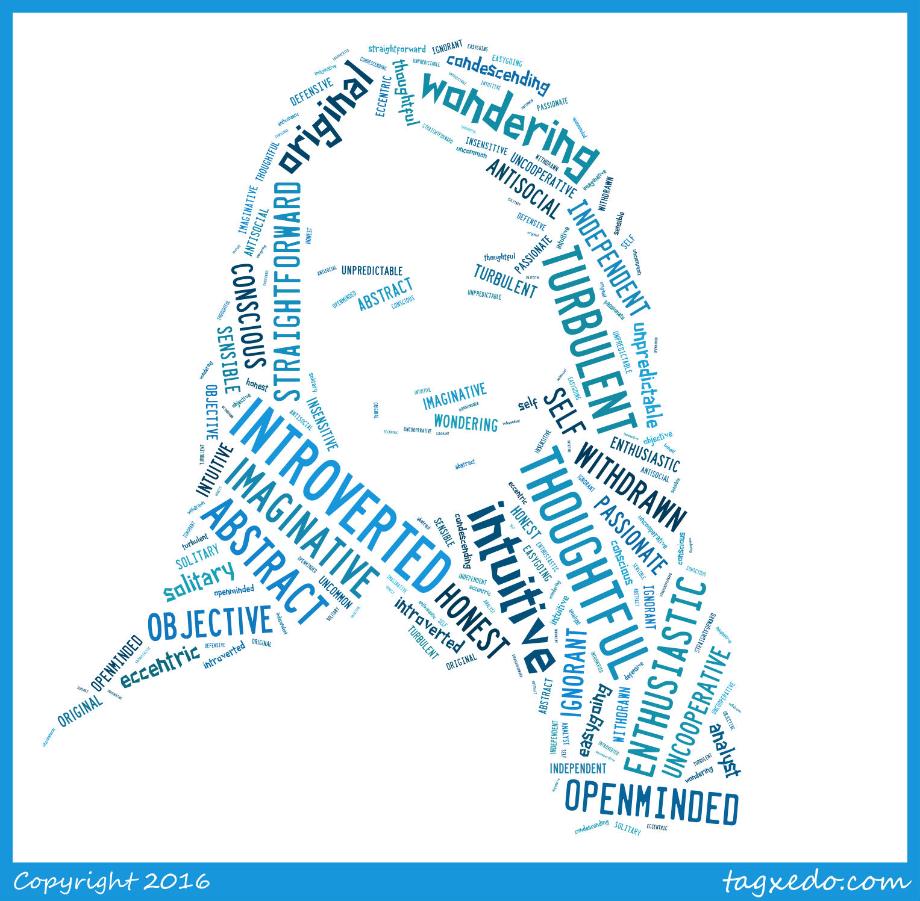
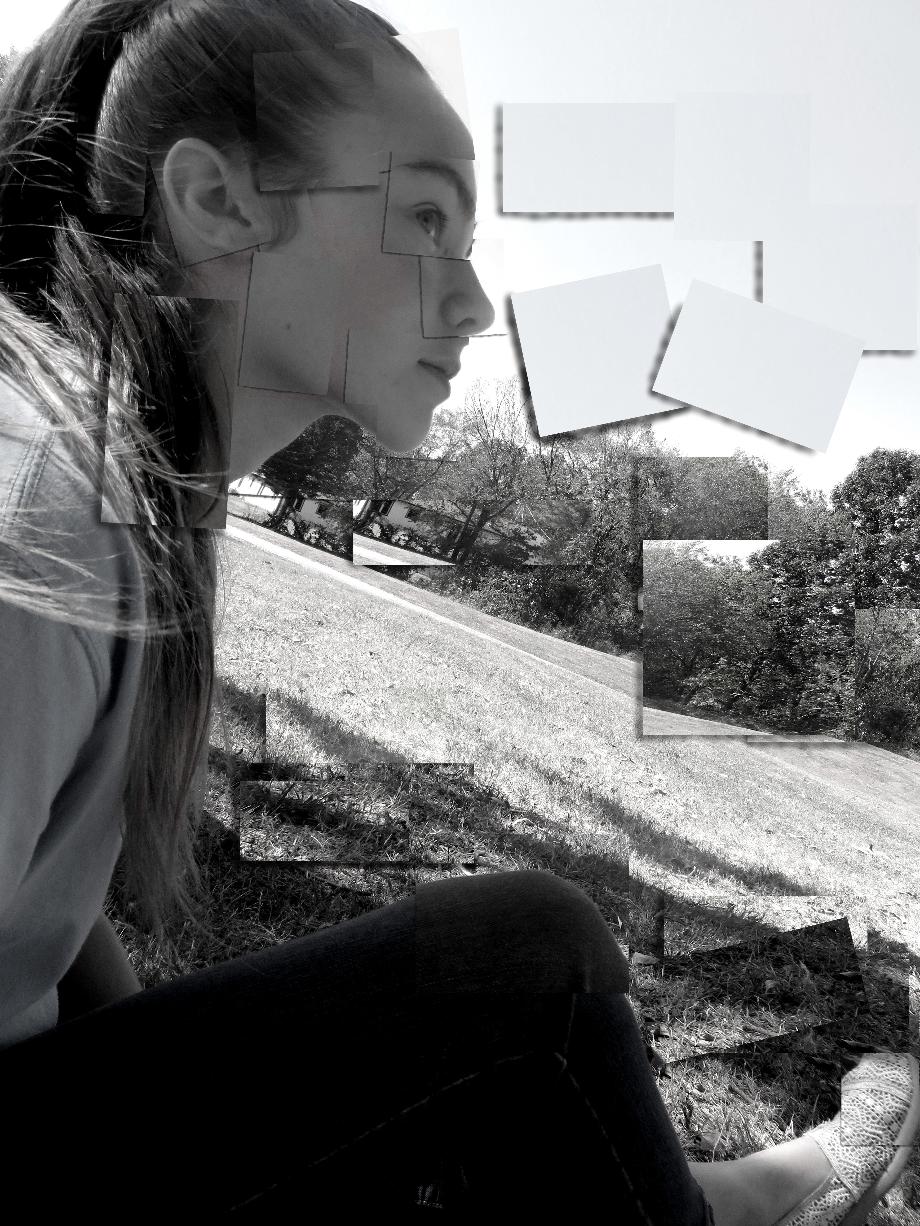
The artwork above may be a little confusing to look at. Used with Tagxedo, this particular assignment is a concrete poem that uses a headshot of mine as the layout for the words I chose to describe myself, and the color scheme was set to my liking. Simply put, I took a picture of myself, added some words, and now the words make up the silhouette of my face and hair.
But why those specific words? From my point of view, those words make up who I am (ironic, I know). Each of them describe my personality, which doesn’t always come across. Most are adjectives riding along a common theme: I distance myself from others, I usually keep my thoughts to myself, and I am constantly trying to solve something, and all of this can make me seem far-off and absentminded. This project may or may not be my explanation for that appearance of only space between my ears.
Overall, this picture does represent me better than most photographs, which is one of the reasons I enjoyed this assignment. To be completely honest, almost all of the pictures I’m inare full of fake smiles. First off, I wasn’t smiling in the picture I used, and I feel like more than my appearance gets across in this poem, especially compared to a photograph. Even if I had a natural shot with a genuine smile, a picture is only capturing one moment opposed to my typical demeanor. I think this project really helped me realize why I hate taking pictures as well as learning to use Tagxedo.
Color-wheel Prompt
Reyna
8/23/16
6th period
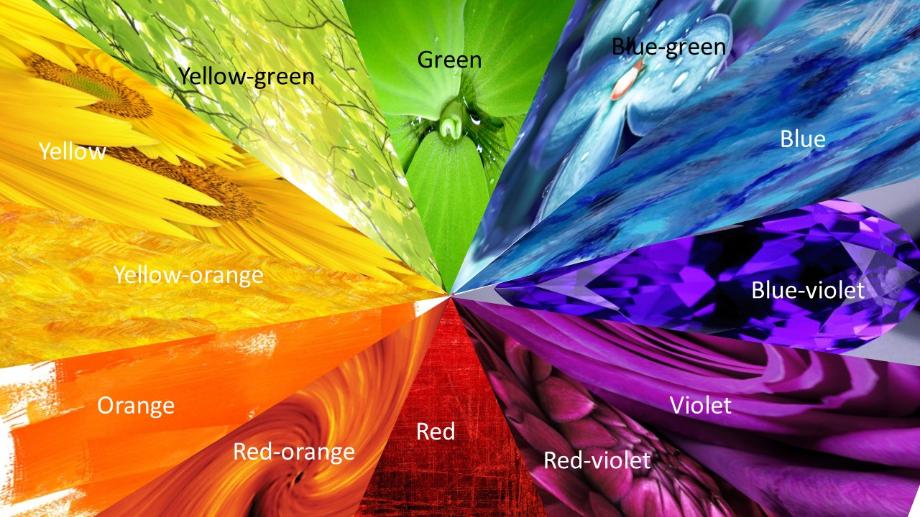
The color-wheel is almost always noticeable in artworks, from the simplest splatter of paint to an intricate oil painting littered with vibrant colors. This way of organizing the colors is the most accurate way of showing the relationships between them. The wheel shows all of the possible color schemes, the user just has to be able to spot them. In fact, they’re fairly simple. For example, the primary color scheme is just the three basic colors. After that, there are secondary colors, or colors achieved by mixing the primary colors. Then, there are tertiary colors. The colors’ names make them seem complicated, but the colors are actually a mixture of a secondary color and the primary color next to it. Fairly simple, right? Putting these methods into action, however, may be a bit more difficult to put into a piece of art.
The primary color scheme may be the most underused combination, simply because there are only three basic colors. Despite the three colors almost never being the focal point, one painter in particular is notorious for his simple artwork that was both visually appealing and beautiful. Using only three colors with a white background and a black border, the simplicity and coherence of Piet Mondarian’s piece was what made it so iconic. Also, in Roy Liechenstein’s piece made in 1963, using a comic-book art style, he shows the relation between the girl’s thoughts and her surroundings. It ties in the entire picture, whereas another color scheme may have been odd with such an eye-catching art style.
Overall, the color-wheel influences the meaning of the piece and the observer’s attention to a certain object. Colors can be used to portray feeling and connotation, without symbolizing a word or an action. Colors have a visual appeal that is developed when we are first given sight, we often don’t take time to appreciate the impact of them.
Graffiti wall prompt
Reyna
8/30/16
6th period
Graffiti is one of several ways to publicly express an idea, concept, or emotion anonymously with eyecatching graphics and vivid colors. Artists use graffiti to repurpose a negative space with something meaningful that is often pleasing to the eye. For many artists, graffiti is a comfortable medium to work with. People create graffiti for the sake of interesting artwork, and the great thing is graffiti does not require a specific canvas. Graffiti can be nearly everywhere because it is an expressive and vibrant way to fill up space.
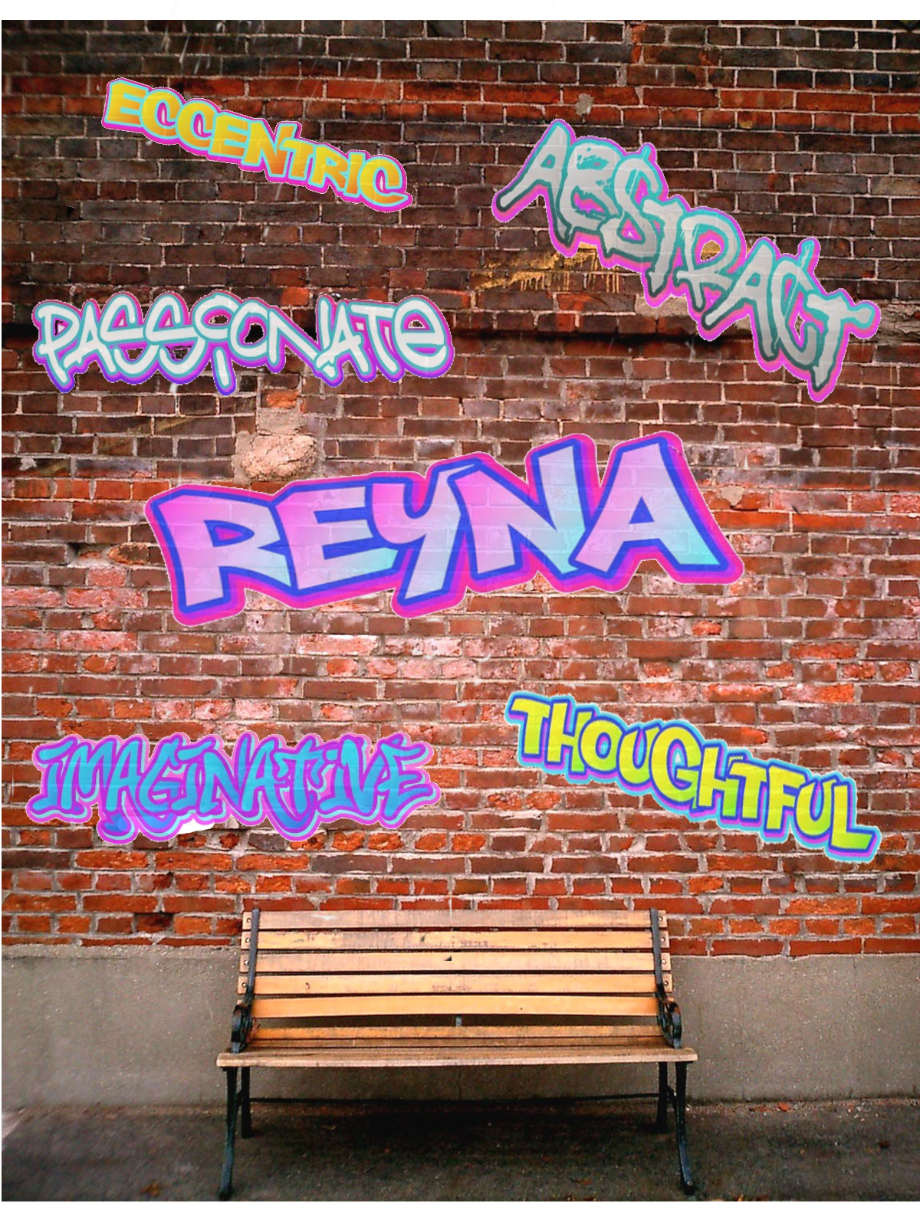
In this project, I attempted to recreate graffiti on a simple brick backdrop using a digital art program called Gimp. However, I first had to make the actual graffiti, so I used the site Postergen (see link below). I typed in my name, which would be the word in the art, and I chose from a range of texts and shadows and colors. After trial and error with many color schemes, I finally had my name. I repeated the process several times, each time typing in another word that describes myself. Next, I copied and pasted the brick background into Gimp and then added my words in layers (I did this so when I went back and edited it my background wouldn’t disappear). Around the words were a white background, which I got rid of. After that, I placed, sized, and rotated my words how I wanted them, making my name the focal point. To make the “graffiti” more realistic, I made sure the words were somewhat see-through, just so the brick could show through in the words. I exported my final product as a picture, then I was done!
The words I chose that surround my name had to have one thing in common: the words had to describe myself. I selected the words imaginative, thoughtful, passionate, abstract, and eccentric. I have always been a bit of a daydreamer, and I’m always coming up with far-fetched ideas when I should be solving a multiple step equation with variables. I am a thinker more than anything else, and I often like to keep my thoughts to myself, especially on things like literary analysis. Also, when I enjoy something, I try to commit myself to it as much as possible. For example, I have been in dance since I was four, and I still love it. I’ve never been the most predictable and clam person, either, which is why both abstract and eccentric suit me. These words combine to amek only a part of me, but this part isn’t always what comes across when people meet me.
Links (or references so you know what I’m talking about):
http://postergen.com/graffiti-creator

Food Face Writing Prompt
Reyna
9/7/16
6th period
Riddles are meant to perplex the mind and provide new perspective to a usually simple and bland topic. A famous painter known as Arcimboldo redefined this concept with his bizarre portraits created with smaller objects that all share a similar theme. Why would a talented artist spend all of his time painting random objects just to create a face? Aren’t the objects used and portraits rather ordinary and rather disinteresting? Arcimboldo’s detailed paintings may be created to force the observer to look at the big picture and what created it. Or, perhaps Arcimboldo wanted his audience to look at the smaller details. In the art world, audiences almost expect a gorgeous painting, which nothing like the eerie yet beautifully strange representations of people. This artist used his style to challenge the audience to change their perspective.
When constructing my “food face,” I originally looked for the foods that resembled human traits (freckles, eyes, nose) with the most accuracy. However, halfway through I decided to embrace creativity and pick some of the most outlandish foods in order to challenge myself to distort and layer everyday objects to create facial features, which is a lot easier said than done. I arranged the food based on its ability (and some humor) to mimic the look or function of human attributes. As you may see, I did not choose foods that made the face realistic. That was not my goal. Instead, I chose items that look like more of the texture than the actual feature. I tried to highlight certain aspects of the face through food, which gives it rich color and many different textures. This project gave me new perspective on observation and the way objects can be manipulated to show characteristics of a person’s face.

Hockney Writing
Reyna
10/24/16
I wake up gasping for air in a sea of blankets. It wasn’t real, I realize. I wasn’t real. I try to lock my hysterical tears in my swollen eyes, but the circles under my eyes act as water buckets for my shaking tears. I try to erase the nightmare from my conscious state, but what if the scenario’s been reoccurring for a reason? What if I’m unconscious to an apparent truth and this is how I’m supposed to wake up? Wake up. I start crying all over again.
Paranoid, I walk through the halls cautious of every click clack my shoes make against the pale worn tiles that reach forever in front of me. The shadows seem that much darker with the Sun piercing through the window. As I approach the corner, I recognize a familiar face. Familiar before I saw my world dematerialize into nothing then escape it and wait for the reality to crash all over again. She smiles. My stomach turns as I force the corners of my lips into a friendly face. Sarah frowns. I simply walk away, too terrified to revisit my demons for an explanation.
Walking by muscle memory, I notice how meticulously everything is placed and how uniform even the walls are. Same color. Same structure. Same setup. Same day as yesterday. “Good morning, Cas!” I hear a familiar voice call to me. Only etiquette. I look, assessing why on Earth someone is here aimlessly wandering the halls. I see no one except a single keyhole glistening in a wall of bricks and a single rusted key lying in front of me. I pick up the key and peer into the lock and see only a soft light. How could something so worn uncover a dimension so foreign? I place the key and turn it. The red bricks bulge out of the wall ajar with the light shining in its place.
Stepping back in awe and terror, the light turns my skin to a fading illusion as it reaches me. I dash to the opposite end of the hall, the light morphing into a hand and reaching out for me. One sharp turn and I’ve barely slipped free of its claws. I scramble to the nearest classroom and lock myself in between its barren walls. A seemingly gentle yet ominous hand pauses outside the door. Through the sliver of a window placed in the door, a pointer finger emerges through the window and nudges my nose. I stifle a scream, helpless.
As if the hand somehow heard my cry, it retracts. Then, smoothly, the hand morphs into a being, still possessing a soft glow all the way through. A forgiving smile soothes me in my trembling. Despite having no tangible body, the light sheds a single tear. It rolls down a smooth cheek, and hits the floor. Instead of light, the extraterrestrial drop shatters everything in the room, including me.
I rush outside for hope in some revelation or relief as my mind swirls into a hole of panic I’ve dug for myself. Instead of breathing, I look frantically for a piece of my world still intact. My world? Reality doesn’t shatter. This isn’t real. None of this is real. My head finally slowing from its hurricane of thoughts, I sit down and take in the test I’ve created. I breathe slowly as I feel bits and pieces of myself slowly drift away. Watching my mind fade to black and an alarm clock growing closer, I patiently wait to open my eyes.
Presidential Writing Prompt
Reyna
11/16/16
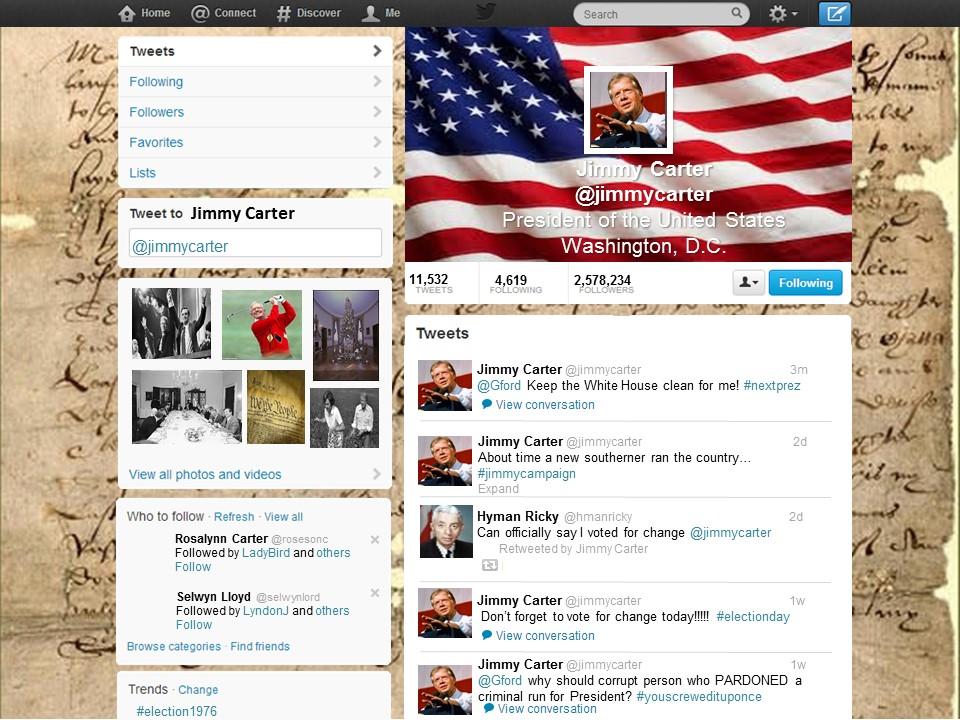
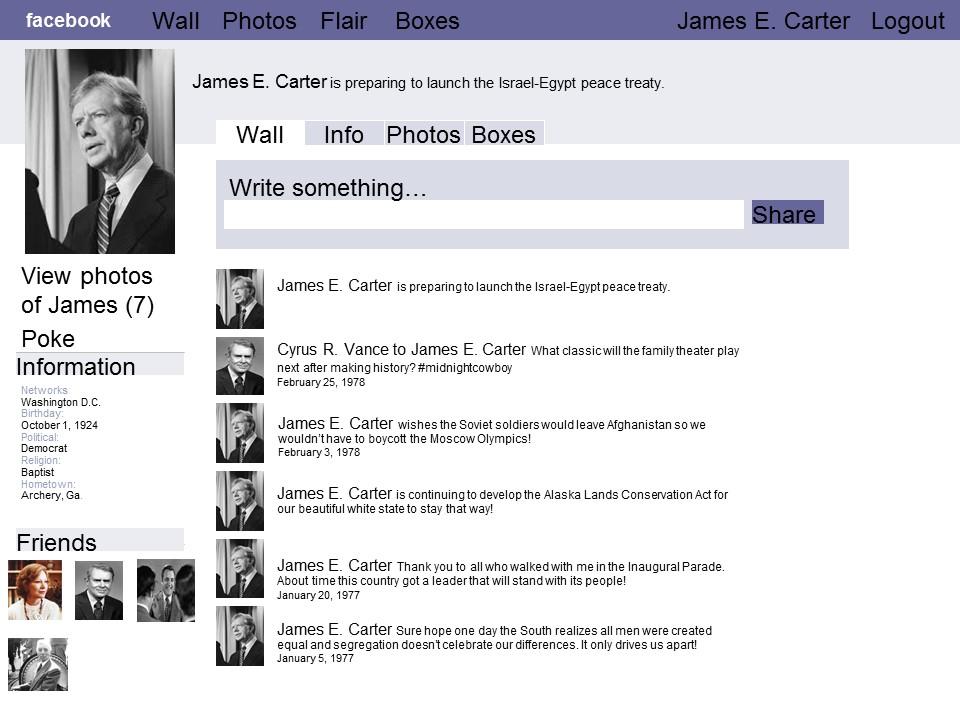
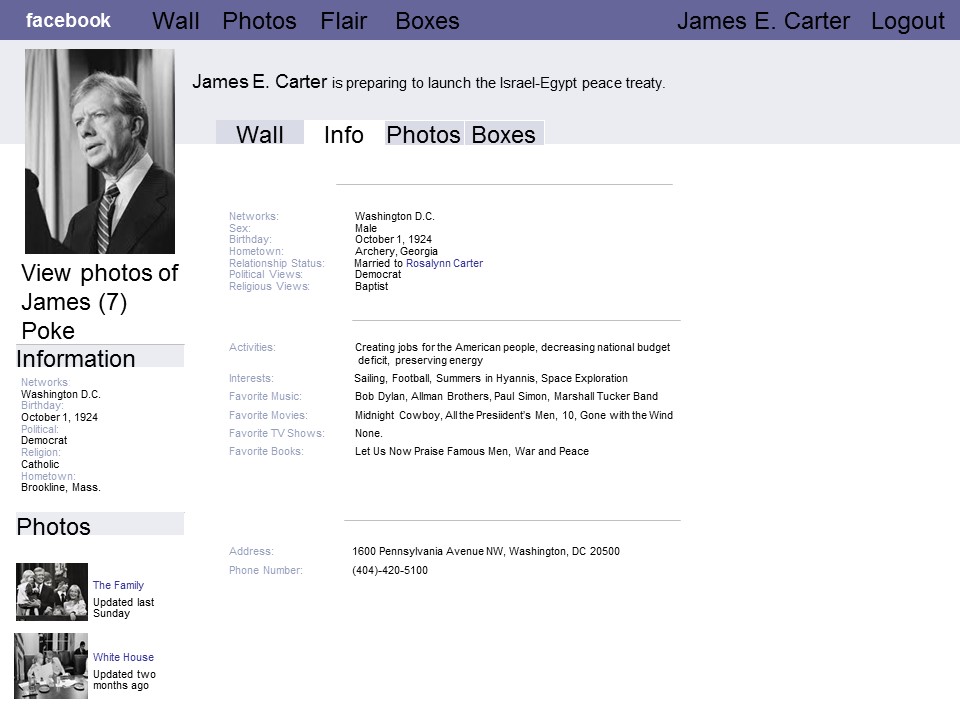
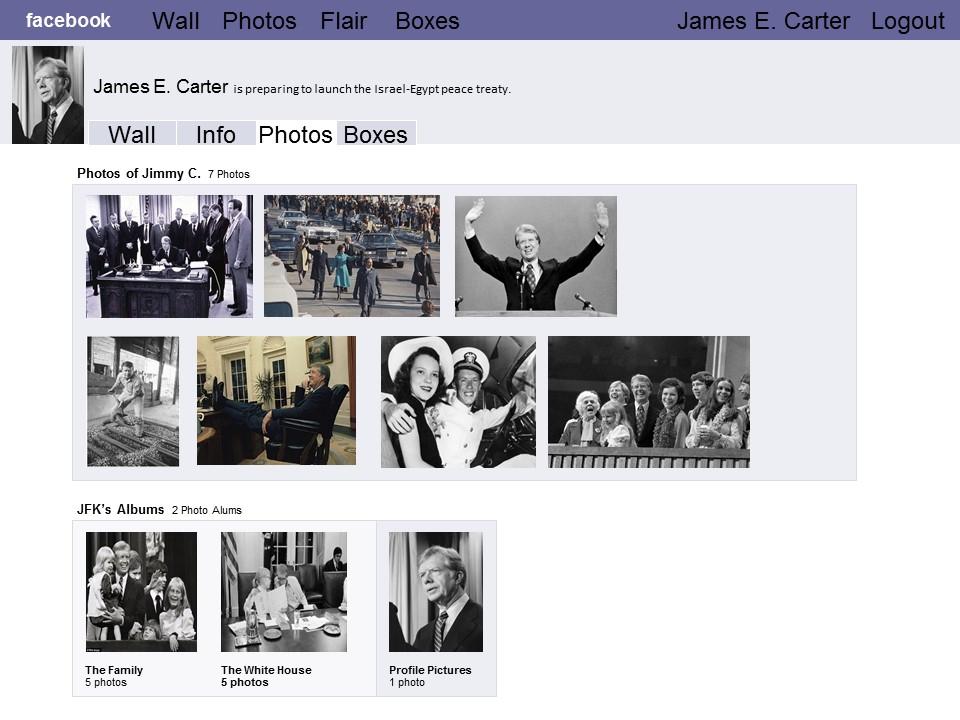
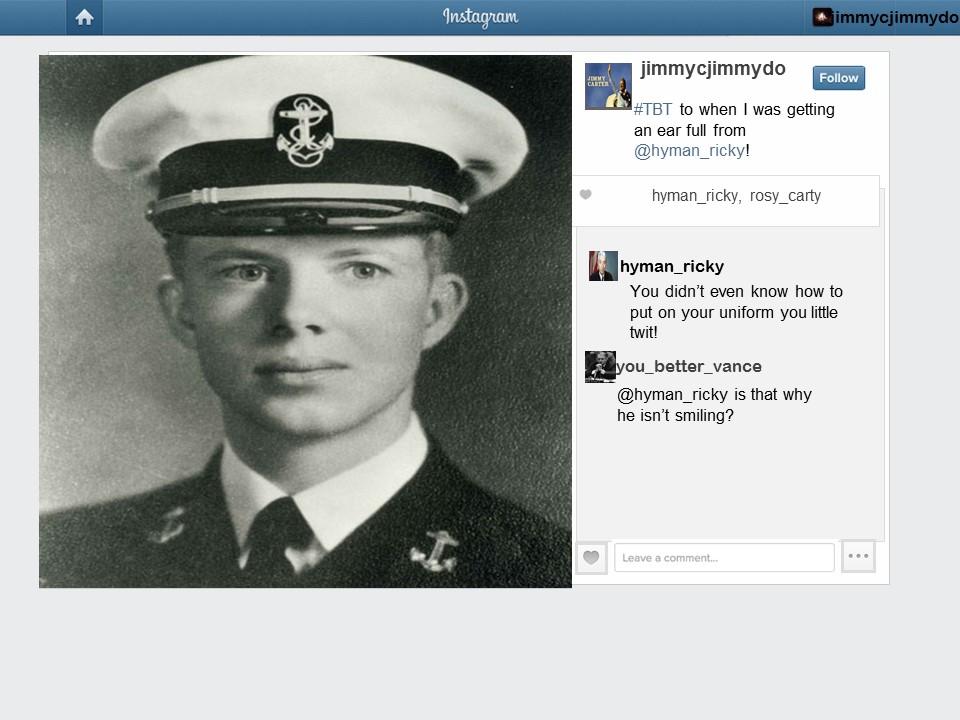
Before my lie as the President of the United States, I remember warm humid days in Georgia, running back and forth from the peanut farm to my father’s store to a warehouse laced with rust and dirt to my father’s store back to the farm. After a sweaty and sticky day with the sun pounding on my back, I would rush home to sit by the radio and cheer on baseball games. After sitting in a small town for too long, I decided to apply to the Naval ROTC program. Engineering really interested me, so I decided to enroll in another naval program in Maryland. I didn’t fit in well with my classmates (they were all tall and outspoken and loud), but I wasn’t there to make friends. I came to study engineering. With this in mind, I managed to graduate at the top ten percent of my class.
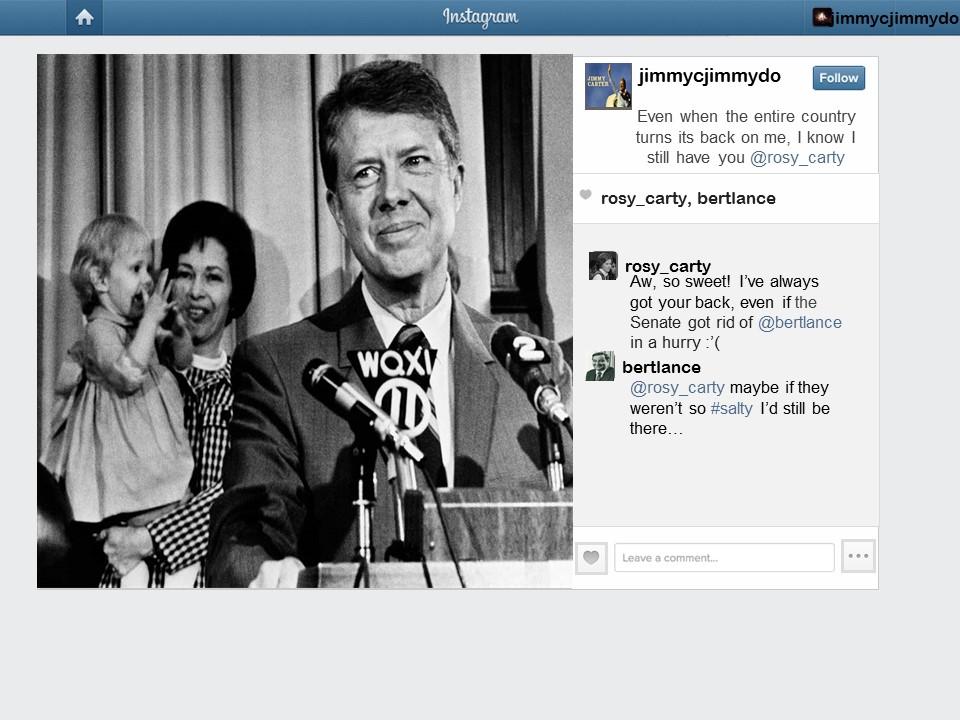
When I finally got into politics, I ran for Senate in my home state. While it was rigged, my opponent’s dishonesty gave me the election. I served two terms as a senator, but I had to make changes in there fast. I got the reputation as a tough and independent politician, which was fine by me. Immediately after I got out of the Senate, I ran for governor. I failed, I guess I was a little too liberal for the white population in Georgia. I tried again, and I won, but I changed my campaign and some people did not appreciate it. Well, it worked, so stop complaining!
After paying close attention to politics and watching the nation lose faith in Washington, I ran my presidential campaign based on trust with the American people, making myself seem like the average citizen. I wouldn’t consider the tactic as dumbing myself down, just presenting my views to a more appealing angle. I still promoted civil rights, and I wanted to support everyone who was going to vote.
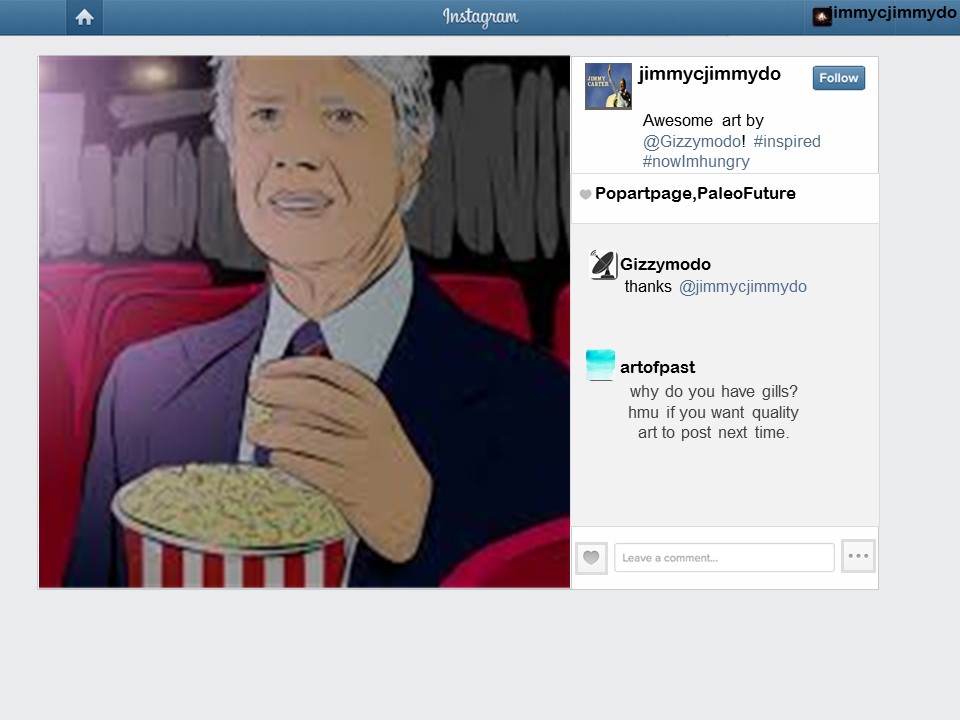
By the time I got into the Oval Office, I tried to the best of my ability to keep close to the citizens. I thought, hey, what could be better than walking side by side with the people who voted for me? That’s exactly what I did the day of my Inauguration. Other than that, my foreign relations policies and enforcing the education system received nothing but praise. However, the economy was in a recession and my entire presidency was (arguably) overshadowed with the Nixon Watergate Scandal. The very thing I ran my campaign on almost destroyed it, too. Overall, I do not regret my decisions as President, but I would not relive them if I could.

Why we should appreciate Malala Yousafzai
Reyna
1/24/17
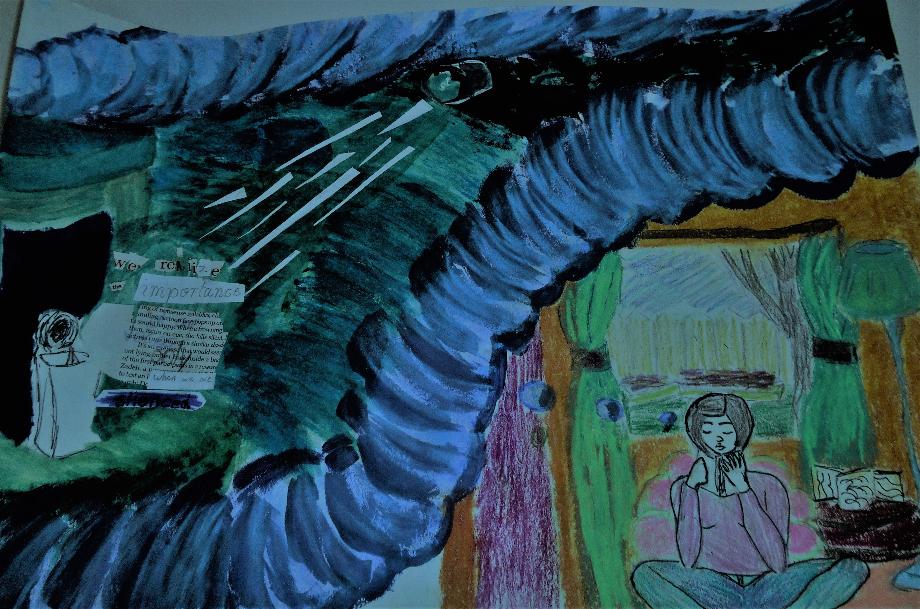
Would you be feel hopeless if your safety and freedom were snatched from your grasp because of the twisted morals of man? Would you be scared if you saw a fourteen-year-old girl being beaten to death because she was walking alone, making her a “woman with radical intentions”? For Malala Yousafzai, these were the daily scars the Taliban left on her life. They tried to contain her, demoralize her, and ultimately kill her, all while she was a teenager. But, Malala refused to let the group that stood for power in fear to win.
Malala spent her early years learning and loving it. She knew her education would most likely be cut short, but that never dampened her dreams of being a political trailblazer. From a very young age, her homeland was very fond of the idea that men were superior to women. Malala, having two older brothers experienced this firsthand. This injustice subconsciously made her voice louder.
Little did Malala know, that was the least of her troubles. As the Taliban’s toxic influence continued to take over her hometown’s minds, they took away her everyday independence, down to walking in the street, not to mention her education. Infuriated but hushed into silence for her own safety, Malala was taught in secret by her father. At the same time, journalists from America were conducting interviews through radios. However, Malala’s parents insisted she was anonymous. Nevertheless, her stories of what she saw and her oppression caught the eyes of many.
In fact, maybe too many. The Taliban were soon knocking on every door and smashing every radio. They didn’t want their utopian ideals to be crumpled by the western ideas of equality. Some argue they had no choice. The rest of us can see that they hijacked a bus Malala was riding home in and shot her in the head.
Despite her nearly fatal injury, Malala did not stop speaking out against them. To this day, Malala Yousafzai is known for her beautiful words of her tragic story, but even after almost losing her life for basic rights, she still says she hasn’t had the worst of it. Journalists once asked Malala if she feels she had lost her childhood. She responded girls who had been married off to a stranger at ten lost something. She had not.
!!!Characters!!!
- Leah
- Marley
- Trynn
- Stranger
- Kris
- JC
- Mr. Tencer
- Louise
- Nurse
- Front desk lady
- Officer
- Narrator
Scene 1
Narrator: The scene is set in Manhattan, New York, where a news column thrives off its city’s scandal. Last week, a historic apartment building was burned to the ground, killing three unnamed residents. Leah B. Harper, a journalist, narrowly escaped the fire, but her roommate Marley was not as lucky. Placed in a mental institute, the fire took Marley’s memory of the last ten years of her life, including her memory of Leah. Now, overwhelmed and distraught, Leah is handed the summary of the burning building to write her next column for Manhattan Main by her boss, Mr. Tencer.
Leah: Sir, I can’t do this. I can’t take this story.
Mr. Tencer: Well, why not, Ms. Harper?
Leah: Because my-
Kris: (walking up, almost yelling across office) Well, if she can’t write on the story, I surely can. Kris Windell, at your service, sir!
Mr. Tencer: (rolling eyes) You’re the last person I would give such a serious topic to. But, if you’re the only one up for it, you may as well broaden your horizons in editing.
Kris: As I always say, if there’s an opportunity-
Leah: You know what Mr. Tencer, I’ll be fine. Just give me the case. Anyone but him. (cuts eyes to Kris)
Mr. Tencer: Alright then. Looks like your opportunity will have to wait then, Kris.
(Mr. Tencer leaves)
Kris: What was that about, Harper?!
Leah: I don’t want you getting my next promotion, that’s what, Windell.
Kris: Well could you at least be more subtle about your sass next time? Mr. Tencer seems like the person who prefers sugar over salt, so I may just get the raise, sweetie.
Leah: Who said you were sugar? Or remotely nice in general?
Kris: No one. I’m just implying I’m more likable than you.
Leah: (fumes profusely)
Mr. Tencer: Oh! Leah, one more thing. You’ll be working with an intern of ours. He’s more than qualified for a permanent position here, so I want give him that chance. I’m hoping you’ll give him that too, right?
Leah: (groans) Sir, I am more than capable of doing this on my own. I don’t need some newbie tripping me up.
Mr. Tencer: Well, this “newbie” happens to be a graduate from Columbia, just like you. At least give him the benefit of the doubt.
Leah: Fine.
END OF SCENE
Scene 2
Narrator: Leah received an email from Wellness Mental Institute stating she could visit Marley, but not face to face. Leah will use specialized equipment, the newly added LOCKLOOK monitor to be precise, to communicate with her to avoid meeting face to face. This policy was set for the sake of the patient and the visitor. Worried, Leah tiptoes in to a clear white room with a monitor in the center of the room. A caretaker is waiting next to it, as she will observe their conversations. The nurse advises Leah not to mention Marley’s name while they speak. She also warns Leah she shouldn’t expect the girl to remember her.
(through the monitor)
Leah: Hello? It’s me, Leah. We’ve been best friends since college. We live together. That is, until our apartment burned down.
Nurse: (whispering with a scowl) Keep it light, please.
Marley: No, Louise, I want the truth. I’m supposed to know this girl. And now I don’t. I need her to try and fix me.
Louise: But honey, you’re not broken.
Leah: Can I talk to her now, please?
Marley: Yes!
Leah: So, how are you holding up? Are you okay?
Marley: All right, I guess. The food here is horrible. I feel like an animal locked in its cage. They won’t even let me go outside. The staff told me I’m “too unstable”.
Leah: That’s awful. But it’ll get better. I’ll make sure of that.
Marley: I sure hope so.
Leah: This is making me sad and awkward. Let’s change the subject.
Marley: Right. Enough sad things. So, what did we do together in college? Where did we go? What did I study?
Leah: (smiling) You loved wandering around the campus. We went to Columbia University, and you are an editor at Manhattan Main. I’m a journalist there.
Marley: Okay, good. We’re not losers. Where do we live?
Leah: (pauses) …Well, that’s the thing. We used to-
Louise: (claps hands once) Okay! That seems like enough for today! See you next week, Leah!
Marley: But I want answers!
Louise: Seems like enough information for one day to me. Goodbye now! (shoves Leah out the door)
*door slams shut*
Leah: (whispers) Good riddance, Louise.
END OF SCENE
Scene 3
Narrator: After a rather awkward and frantic encounter, Leah now makes her way to the burning building in which she will publish a story on, she meets an intern roughly the same age as her, who goes by JC. Leah and JC must work together to solve the mystery that is the cause of this mysterious fire.
Leah: You must be JC. You’re new, right? So you probably don’t know what you’re doing. Just follow me and don’t get in my way, because it isn’t your name going at the top of this article, okay?
JC: Yeah… um… cool?
Leah: Have you even looked for where the fire started?
JC: Actually, it looks like the fire started manually in one of the rooms.
Leah: What makes you say that?
JC: One of the rooms on the far side of the entrance was filled with traces of nail polish remover, which seems like an odd household item, but, it’s highly flammable. Due to the destruction pattern of the fire itself, the fire seemed to have started from that room. That means someone had to have manually started the fire.
Leah: (snarky) Well done, Sherlock.
JC: Well, are you going to look at the crime scene or what?
Leah: Hey, you’re under my wing, remember? You follow me. Unlike you, I have other articles to publish for this company. Did the room number tags survive the fire?
JC: Yes, actually. Do you want the room number?
Leah: Yeah, just so I know where I’m going next time.
JC: Room 128.
Leah: Oh…
JC: What? Sound familiar?
Leah: That’s my old room number.
END OF SCENE
Scene 4
Narrator: Noticing Marley grew relaxed when talking about their life together before the fire, Leah continued to tell stories of their days in college together. Louise had only been there for the first week, so there was no one to monitor what they said to each other. Leah, however, was still shaken by the fire started in her- their- apartment. Who would do such a thing? Why? What did they do? Marley, completely oblivious to what had happened, kept reliving her past life wiped from the fire.
Marley: (laughing) Did I really rip every page out of my math textbook just because I didn’t pass my midterm?
Leah: Yeah. Then you turned those pages in as your next math assignment.
Marley: Wow! I really didn’t care at all for that professor!
Leah: You never cared for math at all, either.
Marley: Really? All I’ve been doing in this jail of a hospital is playing Sudoku.
Leah: Well, you’ve always liked puzzles.
Marley: Huh. I guess some things never change, even after your memory gets wiped by a few stories worth of concrete.
Leah: If you don’t mind me asking, how did the hospital think you lost your memory?
Marley: I was told a building collapsed on me, hit my head in just the right spot, and bam. I lost ten years’ worth of memory.
Leah: Interesting.
Marley: (slightly panicked) What? Is that not the truth?
Leah: Kind of. They just left out part of the truth.
Marley: Well quit teasing me and just tell me! I don’t even care how you know, just tell me!
Leah: I know because I’m writing an article on it. And, by the looks of it, someone filled our flat with nail polish, which is very flammable. In other words, someone wanted to hurt us, or maybe even just you.
Marley: Am I that bad of a person?
Leah: …What?
Marley: Was I that awful? Did I really make that many mistakes?
Leah: Okay, I know this is hard-
Marley: (hysterical) No, you don’t! Do you know how hard it is to forget everything and everyone you love only to find out if you ever get out of this crazy-house you’re returning to a life that is messed up enough as it is? What if I don’t want to back to normal?! Not that I would know, because I forgot what normal feels like!! (sobs)
Leah: You think this is hard for you?! I have the responsibility of salvaging the only person who has been there for me through the last five years of my life! I don’t even know if there’s much left to save… I’m not good at fixing broken people! I’m frustrated and broken enough as it is!
Marley: There’s a difference between missing and broken.
Leah: Well. Maybe you’re both.
Marley: You were supposed to come here to comfort me, not hurt me. I think you need to go.
Leah: I’ll let myself out.
END OF SCENE
Scene 5
Narrator: Storming out of a heated argument, Leah finds comfort in JC’s advice, and slowly learns to give him a chance. At her old apartment building, Leah finds more clues to the mystery, unraveling an unsettling truth.
JC: What did she say after you said that?
Leah: She told me to leave.
JC: Ouch. How long have you known this girl?
Leah: Five years. We met in college.
JC: Well, you probably take notes on what she doesn’t like about you, just for the sake of strengthening your friendship. I mean, sure, you have to build it back up from square one before you can improve it, but maybe you weren’t listening to her the first time. You can learn a lot about yourself from a stranger, you know.
Leah: I’m not going to pretend that I like what you just said, but I’ll consider it.
JC: You don’t have to like it. Just try it, please?
Leah: Okay. But no promises.
JC: On a more gruesome note, is that blood on the wall?
Leah: Yeah, it looks like it. Why is the wallpaper scratched with it?
JC: Let’s follow it.
(both run down hallway)
JC: It just… stopped!
Leah: That’s very sketchy.
Leah: Wait… hold on. I think the stairwell is behind this door.
(door clicks open to reveal more blood and a broken locket)
JC: How the heck did you find that?!
Leah: I used to live here, remember? Marley and I would always use this stairwell when we came home late. We had cranky neighbors who would complain about the elevator being too loud.
JC: Well, glad it came in handy, right? Say, what’s that locket on the floor?
Leah: (picks up locket and gasps) It’s Marley’s.
JC: Looks like she had a rough night.
(Leah shoots a glare at JC)
JC: Right. Bad timing. Let’s follow the footprints and blood and see where it leads.
Narrator: JC and Leah follow the winding stairs up to Room 128, where Leah discovers a horrifying truth.
Leah: Why did I know this would lead to our flat?
JC: Uh, Leah? You might want to see this.
Leah: What?!
Narrator: And there it was. A pool of blood on Marley’s stripped mattress, still covered in ash.
END OF SCENE
Scene 6
Narrator: Leah, with a churning stomach from the sight of so much blood, heads straight to the mental institute to convince herself that Marley was still alive. If she had come that close to losing her, Leah was not going to take her for granted.
Leah: I’m here to see Marley Michaels.
Front desk lady: Who?
Leah: (frustrated) Marley J. Michaels?
Front desk lady: Miss, I don’t know who that is.
Leah: The girl who lost her memory?
Front desk lady: Oh! That girl. She’s on the hallway to the left.
Leah: Thanks.
Narrator: Odd that Marley wasn’t registered in the institute’s system. Maybe the girl at the front desk just didn’t know what she was doing.
(through the monitor)
Leah: I’m sorry. This is confusing, frightening and uncertain for you, and I let my own fear out on you. You didn’t deserve that.
Marley: You’re right. I didn’t. But I’m glad you get what was wrong about what you did. It’s not just your fault, though. I overreacted. I apologize for being such a baby.
Leah: (weak laugh) It’s okay. I’m just glad you’re alive.
Marley: (weaker laugh) ha, yeah… that’s always good.
Leah: Marley, do you remember me yet?
Marley: I’m remembering bits and pieces of blurry nights and exams, but not you. I’m sorry.
Leah: (disappointed) Oh. Don’t apologize.
Marley: Can you tell me another story of when we were in college together? That’s the muddiest time for me.
Leah: Well, there was this one time towards the end of the year when the journalism students threw a huge party that went until four in the morning, and we just sat in the corner judging everyone.
Marley: Well that was exciting. For a minute I thought that was actually going somewhere.
Leah: I mean, it did for me. I met a guy there, we dated for a good bit, then one day he got in a fight with his friend and smashed a Florence flask on top of his head. And that was the end of that fairy tale.
Marley: Sounds like happily ever after to me. Did you ever talk to him again?
Leah: I kind of have to. I work with him.
Marley: That sucks. How did he get a job there if he was that unstable all through school?
Leah: No idea. He’s really trying for this next promotion, though. He almost got the boss to give him the burning building story.
Marley: That makes no sense.
Leah: What doesn’t?
Marley: If he’s such a hothead, why would he want work that forces him to collaborate with other people? A mysterious fire in a bustling city isn’t exactly a piece of cake when it comes to writing.
Leah: …
Marley: What’s wrong?
Leah: Nothing. I’ve got to go.
Marley: Bye?
Leah: Bye! I’ll keep you updated!
END OF SCENE
Scene 7
Narrator: With the revelation of the truth in her reach, Leah sets out for answers from the suspect himself.
Leah: (knocks on door) Kris? I know you’re home.
Kris: What do you want?
Leah: I need to talk to you.
Kris: Alright. Are we going to stand here or are you going to come in?
(In Kris’s kitchen)
Kris: How are you holding up?
Leah: Fine, I guess.
Kris: (sigh) You don’t have to pretend to be strong all the time. You can admit she’s gone.
Leah: (disbelief) Sorry, but you’re the last person I want comfort from.
Kris: (snaps) Then why did you show up?
Leah: Sorry I just need some answers.
Kris: To things like…?
Leah: Like where you were when the fire started.
Kris: I was at work, as always.
Leah: Ok, sure. That answer will have to do for now. This is random, but can I use your bathroom?
Kris: Um, sure. You’re so weird lately.
Narrator: In the bathroom, Leah went looking for anything that might give Kris a reason to cover the story on her apartment. Like a receipt, or a bloody knife, or-
Or a dozen empty bottles of nail polish remover.
Leah rummaged in a medicine cabinet until she found rubber gloves to preserve any fingerprints on the bottles, threw them in a plastic bag and slipped out of the bathroom window.
END OF SCENE
Scene 8
Narrator: Leah, panting from her sprint from the back of Kris’s house, finds JC to inform him of all this new information in an explosive manner.
Leah: We caught him, JC. The man that killed my best friend needs to be punished. The man that let me talk to a stranger for two weeks believing it was Marley deserves to die!
JC: Well it’s all going to be useless if you didn’t have a warrant when you got those bottles from his house.
Leah: He invited me in, does that count?
JC: Leah, we can’t use that in court.
Leah: Who said anything about court?
JC: This is a serious crime, Leah. But it’s a serious crime that was committed by a white dude with wealthy parents. The dude reeks with privilege. We need strong evidence. Better yet, we need legal evidence.
Leah: You’re right. I hate to say it, but you’re right. So what do we do? Do I talk to the person who I thought was Marley first or awkwardly confront Kris?
JC: I would go to the girl in the mental institute, just in case she has any information on our murderer.
Leah: Ok. Since your advice worked last time, I’ll trust you.
END OF SCENE
Scene 9
Narrator: Leah hesitates as she stares into the white room flooded with fluorescent lights. She breathes in. She rehearses what she wants to say one last time in her head. She breathes out, and opens the door to see a stranger leaning to a corner, her fair skin glowing. Soft, gentle eyes stared back at her, nothing like Marley’s icy-intense blue eyes that could shatter glass.
Leah: Start explaining. Introduce your real self. Unless you haven't recovered your memory yet..
Stranger: I have.
Leah: Go ahead then. You have a lot of time to make up for.
Stranger: You’re right. I’m Trynn Sako, Marley’s sister. I lost my memory of the last ten years of my life due to falling bricks at a construction site. I’m a civil engineer. I’m two years and six months older than Marley. Louise told me my sister was gone last week. She also told me my family had not known what had happened to me. Louise said I could easily place a restraining order on you, since you had no ties to me.
Leah: So why didn’t you?
Trynn: I saw how sad you were. The monitor has a one-way mirror through it. It’s supposed to stimulate the memory. We remember involuntary behavior more than interactive behavior. Plus, you the only piece of my sister I had left at the moment. It doesn’t help she died angry with me.
Leah: Heck, I honestly believed you were Marley this entire time. Why was she angry?
Trynn: The summer before Marley left for college, before she met you, she was dating my friend Malcom, who was a sophomore in college. He and I have been childhood friends, and he had always had feelings for me. It wasn’t until then that I realized I had feelings for him, too. You never know what you want until it's taken away from you, right? (really unconvincing laugh) Long story short, we were in study hall, we made out, and I was late picking up Marley. Being her impatient self, she walked in, stood in the doorway, then ran right back out. She made me promise to break up with him.
Leah: I’m guessing you’re not good with keeping promises.
Trynn: I wasn’t. I have a feeling I never will be good at it. I dated him in secret for three years, and we got engaged. She obviously found out, and hasn’t talked to me since.
Leah: If any of my older siblings had pulled that, I would be ticked off too.
Trynn: I’m not expecting you to take my side. I just want to give you the truth.
Leah: You’re not the only one who’s screwed up. I was the reason she was in that apartment.
Trynn: (looks at Leah in disbelief) …
Leah: She called me that night saying she needed to tell me something important. I told her to just go ahead and tell me. Marley told me she was pregnant with a child. I froze and asked if she knew who’s it was. Marley then said it was Kris’s.
Trynn: …The guy who nearly killed his friend in college?
Leah: That’s the one. I asked her how long she had been seeing him; she said about three months. I told her we would talk about it later when I got home. Marley asked me if I was upset. I told her I would pray the baby took more after her than Kris. If it didn’t, I couldn’t love it the same.
Trynn: Wow. I didn’t know she had done that. Looks like we’ve all done wrong.
Leah: Yep. I stayed at work late that night to stay away from it.
Trynn: You can’t hide from the truth though, can you?
Leah: Not for long. We’ve both tried and failed at that game, haven’t we?
Trynn: Looks like we have. Go find that loser and put him behind bars for me, okay?
Leah: I’ll do it for Marley.
END OF SCENE
Scene 10
Narrator: With Trynn and Leah now both aware of Kris’s motive of killing Marley, Kris is assigned a story on the mental institute’s innovated and safer technology for visits between patients and their loved ones. The monitor is called LOCKLOOK, and allows the patient to peer in to the visitor. This allows the patient to feel a connection to the visitor without feeling overwhelmed. No, you’re not having Deja-vu. Kris drags his feet through the shining double doors.
Front desk lady: Hello, how may I help you?
Kris: Uh, yeah, I’m here to test out LOCKLOOK? I’m the writer coming in for Manhattan Main.
Front desk lady: Oh, you came just in time! The patient we assigned it with is leaving tomorrow, so the experience won’t be too much of a burden on her.
Kris: Good. I don’t want this to be anymore agonizing than it has to be.
Front desk lady: I’d be careful if I were you. You don’t see me complaining about my job. Follow me and keep your mouth shut.
(Through the monitor)
Kris: Hey, I’m a writer here to interview you about the LOCKLOOK and how it’s bettered your experience in Weldon Wellness.
Trynn: Well, you can’t make a place like this much better can you? It’s a pretty depressing atmosphere. I’m stuck in a white room under blinding light, which doesn’t help my reoccurring migraines, and no matter how much I beg for them to move me, they don’t listen. The staff here have belittled me to a crazy person and nothing more.
Kris: ...That’s a very moving sob-story, but I’m not getting paid to write about how a couple of nurses won’t give you the wifi password. Just say some nice stuff about LOCKLOOK and I can go home.
Trynn: You want to write something interesting, right? Write about a call for change. I’m miserable here, and I’m not about to give the people who cage me in like animal a good review.
Kris: Let me spell this out for you: I. Don’t. Care. How. Pathetic. You. Are. I didn’t come here to feel sorry for a psycho. I’m a writer, not a therapist.
Trynn: What lowly journalism company would hire a hotheaded white boy with a more than comfortable background to interview a mentally unstable freak like me? Does your boss have any common sense?
Kris: Manhattan Main. And I didn’t pick my prompt, sweetie. And how did you know I’m white?
Trynn: (almost screaming) I can see through the glass, idiot!
Kris: Astounding! You finally deemed useful to me! Isn’t progress wonderful?!
Trynn: What’s your name so I can report you?
Kris: Kris Windell. What makes you think the nurses will let you report me? You’re insane, remember?
Narrator: Trynn paused at this name, then flipped a switch on the other side of the monitor. Kris thought nothing of it.
Trynn: … You know Marley Michaels by any chance?
Kris: Yes, why? You know something?
Trynn: (laughing) You think I’m reporting you for being a jerk to me? (chuckles again) Oh, no. Not even close. I’m reporting you for murder.
Kris: How do you know that?
Trynn: You really think you’re the one asking questions now? Nope. My turn. Why did you kill her?
Kris: What makes you think you can get me to talk?
Trynn: Because your friend in the burning building left some interesting information before she died. Not only was it interesting, but it gave you motive to kill her.
Kris: (snaps) She wanted to keep the baby, and I didn’t want to be tied down to a family. I couldn’t just leave, there was nowhere for me to go. Thus, I just solved the problem myself so I wouldn’t have to move out of my comfort zone.
Trynn: (raises voice) You think killing Marley along with her baby is inside your comfort zone?!
Kris: (open his mouth to say something but doesn’t) …
Trynn: Leave. Before the cops are chasing you down the street.
Narrator: Kris bolted out running towards the parking lot, clumsily taking his phone out of his pocket.
(Front desk lady enters Marley’s room)
Front desk lady: So how did it go? Were you honest?
Trynn: Brutally. I think he was, too. Let’s just hope it doesn’t come back to bite him.
Front desk lady: Yes, cross your fingers. He seems to have trouble thinking before he speaks.
Trynn: Sharon, I think you’re right (holds up a recording of their conversation)
Sharon: Oh, you got the interview on tape? That’ll be useful!
Trynn: (looks at tape and mumbles) You have no idea.
END OF SCENE
Scene 11
Narrator: The next day, Trynn is finally released from the mental institute, and she wastes no time. She immediately calls Leah via payphone to warn her of the flop that was Kris’s interview, and how her life might just be at stake.
(On the phone)
Leah: Hello? Who is this?
Trynn: This is Trynn. I’m fine, they let me out today. I didn’t call you because of that though. Just listen closely and watch your back, okay?
Leah: Okay?
Trynn: I’ll tell you the details later, but Kris came in to interview me. I knew it was him after a few questions and I confronted him about Marley.
Leah: Trynn, that is so stupid! Why-
Trynn: (desperate) I know, okay?! Just listen to me! I got him to confess and I have his confession recorded. I’m bringing the tape to you at work. I’ll be there in about two minutes. Where are you right now?
Leah: I’m getting coffee with JC. We were about to head out to my old apartment, but I can tell him to cancel and work on it another day. We’re working on editing the article.
Trynn: You have to cancel. Meet me as soon as possible. Kris knows I know, Leah. This guy’s insane. He’ll probably kill me, along with you if you’re not careful.
Leah: I know. I’m coming. I’m leaving JC here. It’s just going to be me and you. See you in a bit.
Trynn: Hurry!
(in Manhattan Main)
Leah: What do you want me to do with the tape anyway?
Trynn: I’d say turn it in to the police, along with the nail-polish remover bottles, just in case they prove to be of some value.
Leah: Okay. Can we take your car? I’m worried Kris might follow us.
Trynn: He may have seen mine, too, but there’s a chance he doesn’t remember my car.
Leah: Thank you. Let’s leave before he finds us here. I haven’t seen him around all day. I’m getting nervous.
Trynn: What are we doing just standing here? Let’s stop talking about it and go!
END OF SCENE
Scene 12
Narrator: While driving to the nearest police station, Leah spots Kris’s car in the traffic.
Leah: I’ve got some bad news.
Trynn: What might that be?
Leah: He’s here. He must’ve figured we’d go to the police.
Trynn: (hitting steering wheel) Ugh! I should’ve known! That’s the most predictable thing we could’ve done.
Leah: Let’s just hope we can keep moving, and he doesn’t see our car.
Narrator: With a ding from her phone, Leah’s optimism was crushed.
Kris: Don’t think you can get away this easily. I can see you. I’m warning you in case you want to destroy the recording, keep quiet, and maybe survive.
Leah: Trynn?
Trynn: Yeah?
Leah: We’re screwed.
Trynn: He knows where we’re at, doesn’t he?
Leah: Yep. He wants us to destroy the tape. He’s threatening to kill us.
Trynn: Not surprised. He’s scared, that’s why. We just need to move faster. Traffic’s slowing us down.
Kris: (through text) Looks like I’ll catch up to you faster than you’d hope.
Trynn: Let me see it!
Narrator: But you see, you should never text and drive, or read a text and drive. Trynn found out moments later.
Leah: Trynn PAY ATTENT-
Narrator: The car spun out of control and crashed violently into the curb and into a motel sign. Luckily, Leah and Trynn were a block away from the police station. But, Kris was three cars behind them. Trynn seemed unconscious, the tape clutched in her hand. Leah slapped her across the face as hard as she could.
Trynn: AH!!
Leah: This is your fault!!! We don’t have a car now! We have to go! The police station is right there!
Kris: (chuckles) You better start running, ladies!
Narrator: And they ran like their lives depended on it. In the outskirts of Manhattan, Trynn and Leah searched frantically for a sign of justice.
Trynn: (panting) We’re lost. We took a wrong turn. We’re behind a dumpster.
Leah: I don’t think you understand that if he catches us, he’ll kill us.
Trynn: Let’s just go through the back door.
Narrator: Through the door, they quickly realized they were in an authentic Mexican restaurant, as no one spoke an ounce of English. After being angrily escorted out of the kitchen and to a table right next to an enormous window, both spotted Kris lurking outside, pacing back and forth, anxiously waiting for them to make a mistake. Leah and Trynn were right beside the police station. The tape slipped back and forth between Trynn’s sweaty hands.
Trynn: We’re stuck. What’s the plan?
Leah: I say wait him out. He can’t stalk us forever. When he leaves, we bolt.
Trynn: Ok. I just hate how we’re by a window.
Leah: I don’t think we’re moving anytime soon. Just keep your head down and pray.
Trynn: I’ve never been this scared in my life.
Leah: Me neither. I’m shaking.
(bell on front door rings)
Narrator: A man in a police uniform walks in the front door. A shadowed figure with a gun lodged in the back of his pocket walks in, eyes scanning the whole room. The man in uniform was a police officer, most likely on a lunch break.
The second one was Kris.
Adrenaline auto-piloting both of their minds, they slip under their table, the girls nearly on the verge of tears. The gun seemed to have made the scenario that much more weighted.
Trynn: I say we crawl to the police officer.
Leah: What?!
Trynn: Do you have a better idea?
Leah: Wait until Kris is done inspecting the place.
Trynn: What if he stays until he finds us, Leah?
Leah: Your way doesn’t seem any more logical, Trynn.
Trynn: You need to stop being so careful. If we wait, we’ll get caught. I can state that as a fact. If one of us gets caught, the other will choke him from behind. You’ll do that for me, right?
Leah: Of course I will.
Trynn: Let’s go then.
Narrator: You have to give them credit, crawling on the floor and going unnoticed seemed like their best option. Okay, that was kind of stupid. Very stupid, in fact.But it’s difficult to go unnoticed when a waitress steps on you, screams, then beats you with a broom all the way out of the door. Catching the attention of nearly everyone in the restaurant, Kris, shortly followed them. But, Trynn refused to give up. Bursting through the door of the police station, she came in screaming.
Trynn: Officers, we have a problem!!
Officer: (jumps up in chair from sleeping, seems dazed) Well, miss, what’s so exciting that you come in screaming about it?
Trynn: Sir, my friend and I have found the murder of Marley J. Michaels, my sister.
Officer: Am I supposed to know who that is?
Trynn: No, but we have the murderer’s confession on this tape.
Officer: (laughs) You think we’re going to listen to some tape and then go out and arrest this person?
Trynn: Uh, yes.
Officer: No, no, no. Let me clue you in to how law enforcement works around here: You bring in the bad guy, we question the bad guy, bad guy breaks down into tears over the bad thing the bad guy did, we look at the evidence, THEN he gets arrested.
Trynn: Well that’s perfect because-
Narrator: Leah’s whole body tensed in fear as she felt the tip of a gun press against her lower back. Quickly, she halted Trynn’s speech as she gripped her wrist. Trynn saw a familiar face look over Leah’s shoulder, and there he was. The infamous killer himself. Kris Windell.
Kris: Actually, I don’t think there’s a problem here. I think our friend is just looking for attention.
Officer: Thank goodness! I would hate to run around for a killer during my lunch break.
Kris: (whispers) Walk.
Narrator: And the three of them were back behind the dumpster all over again.
END OF SCENE
Scene 13
Narrator: Even after all they have barely escaped, it looked like the end of the road for Leah and Trynn.
Kris: I gave you the chance to let this go. I gave you the chance to live. You had your opportunity.
Narrator: In that moment, car speeds by, slamming its brakes. The sound of salvation.
Leah: Do you really think killing two more people is going to solve anything?
Kris: Yes. I think it’s going to keep me out of jail.
Kris: In fact, give me the tape.
Trynn: No. You killed Marley, and I’m not going to help you get away with it.
Leah: You took away my best friend. She wasn’t perfect. She made some major mistakes, actually. But she deserved more.
Kris: Well, looks like you will all die deserving more.
Narrator: But he was wrong. JC hit Kris in the back of the head with a shovel borrowed from the restaurant and knocked him out cold. JC quickly grabbed the tape, shoved Leah and Trynn into the back of the car, and drove. Kris was arrested later that week, and the article was published. Being too involved with the crime scene, the story was published under JC’s name, and since he was an intern, Mr. Tencer was forced to give JC the promotion. Leah and Trynn are still uncovering Marley’s past, using each other as primary resources. The two learned that every human being has skeletons in their closet, but they’ll eventually role out into the open. It’s a matter of who sees them that makes all of the difference.
The end
Southern side scene
Number of players
Age Range
3-6
8-109
How you got here
You have been stranded in the Wild West with people you have never met. These strangers seemed to be as confused as you are about your random abandonment, but don’t be fooled: out here, it’s every man for himself. It’s up to you to make your way through the town, befriend the residents, and locate the Sheriff’s office for safety from a desert of chaos and deceit. Get there quick, before the townspeople and fellow players get the best of you!
Game Objective
Be the first player to reach the Sheriff’s office, but make sure you’ve played a fair game! You may pay for it in the end if you don’t… If you’re behind, don’t panic! It’s not over until the fat lady sings!
Game Contents
- Board
- Avatars
- Spinner
- Cards (moving, penalty, and risk)
Game assembly
Game setup
- the board
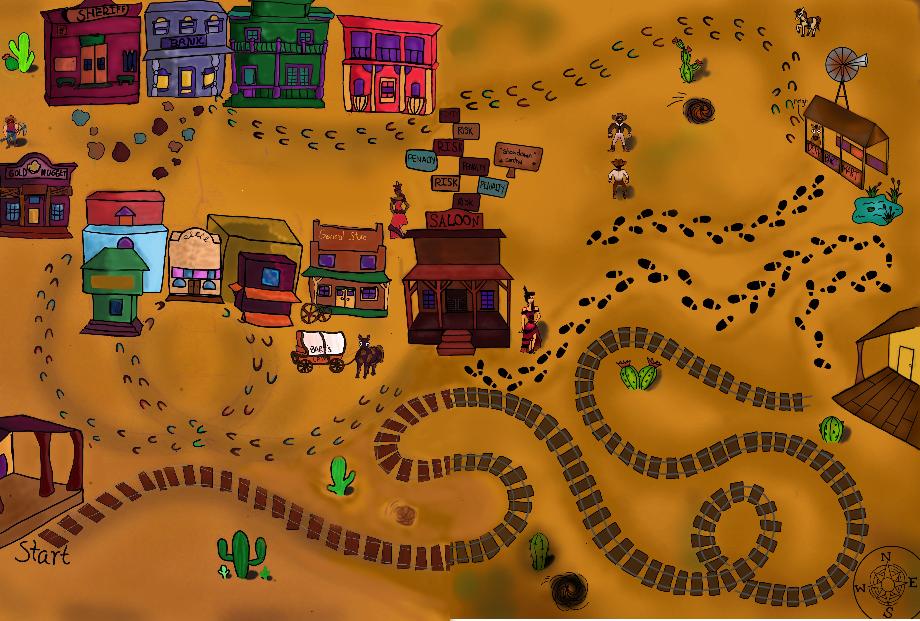
First, lay the board on a flat surface. Make sure all the players can reach the board and its contents before and during the game.
- The cards
There are three different types of cards (excluding landmark cards) used throughout the game: moving cards, which will be used through every player’s turn, penalty cards, and risk cards. Place each type of cards together in their own deck on one side of the board, preferably a side all the players can reach. All cards should be placed face down, and no one should show their cards throughout the game unless the card explicitly says show all players.
Landmark cards should be placed on either side of the board. Every player will use these cards, but only once (hopefully). The players should keep the information on the cards secret and not discuss them during the game.
- The spinner
The spinner will be used only for punishment of other players, limiting how far players can move on the board. Place the spinner to the left of the board for the start, and as the game progresses, place the spinner closest to the player who is using it.
Game Play
Each player draws a moving card, starting with the youngest and then goes to the left. Whoever draws the card with the most moves from the start of the board goes first. If two players draw the same card, the other players draw like normal. If the one of the other players draws a card higher than that duplicate card, that player goes first. If two players tie with the highest card, they draw two more cards. All moving cards are placed at the bottom of the moving deck, and the turn rotates to the left from the winning player.
The first player draws one moving card, which will most likely show a pattern. The player will go to the nearest space with that pattern (NO SKIPPING!) The turn moves on to the left. Players may get a moving card with a pattern and a symbol in the lower left corner. This means players move to the nearest pattern given and get to [depending on the symbols] a) choose one player to use the wheel for the next two turns (colored wheel), b) choose their own pattern to go to (rainbow tile), c) switch places with one player (an arrow), or d) pick one risk card from the top of the pile (“risk”). Players may also lose a turn if there is a red “X” over a blank tile.
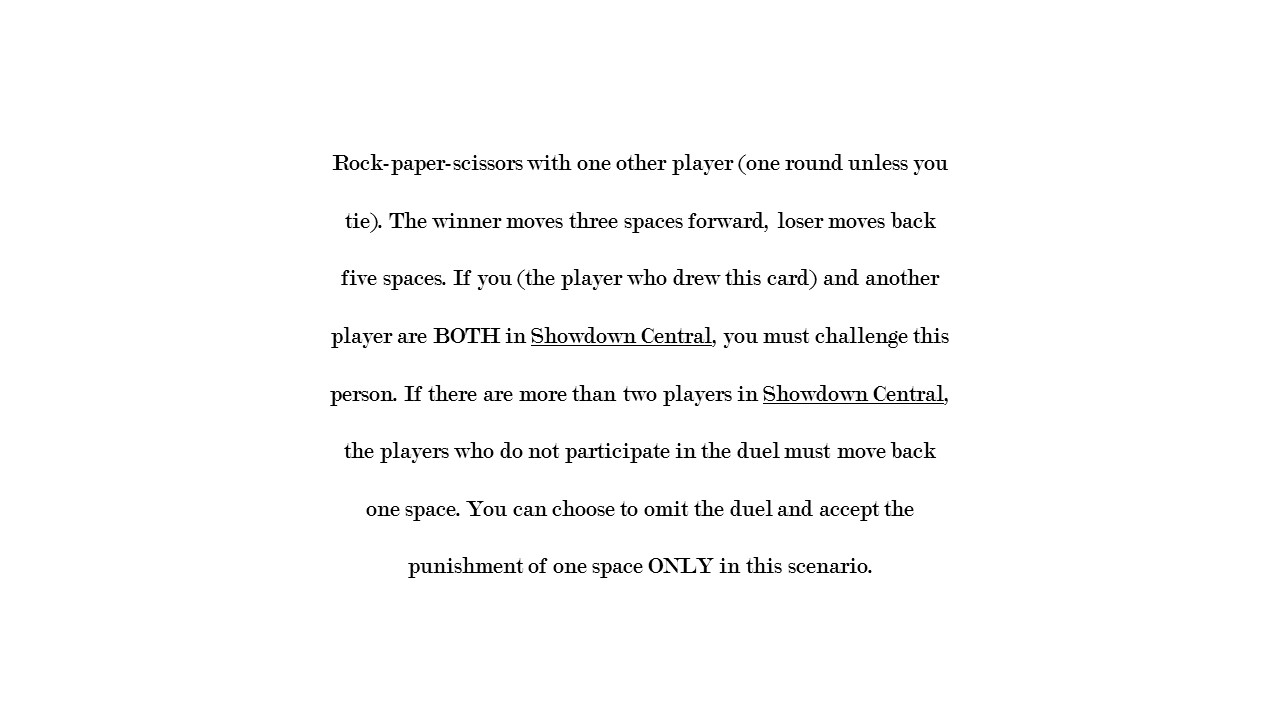
Players may also find cards reading “penalty” or “risk” with no tile at all. Players may either draw one card from the given pile or make another player draw from the pile stated on the card. If the latter is done, that means the player the card is given to doesn’t play again that round (unless the card they draw says “GO AGAIN.” Then, the player draws a moving card.), and the player that drew and gave up the card draws another moving card.
Special conditions
If a player goes three consecutive turns without losing a turn, drawing special cards, or drawing a moving card with none of the symbols listed above, that player draws three “risk” cards and reads them silently without letting the other players know what the three are. The player then chooses one of the three cards to play and reads it aloud. The player must play this “risk” card in the turn they selected it.
Special Cards-In the case of “risk” cards drawn in a result of the space landed on the board or a moving card with “risk” written in the lower let hand corner, the player with the turn chooses the first card in the deck and reads it aloud. Some cards in this category require more than one player. The person who drew this card chooses any other player of their choice, but they cannot choose themselves (it won’t work). Follow this same procedure for “penalty” cards, except the participant draws from the “penalty” deck (all cards must be played in the turn they were drawn).
Board Spaces – Spaces reading “risk” and “penalty” result in drawing from the given pile and not advancing any more spaces. Players can land on these spaces by landing on the nearest space and the color of the special space correlates to the color of the tile on the card (see SHOWDOWN CENTRAL). Some spaces read “GO AGAIN.” Players must land directly on this space with the given color to receive another turn.
Landmarks- Places like the bank, the saloon, and the second stop at the train station are considered landmarks, where players will draw one card with that symbol and read the card silently. The player must decide what path to take in that turn to move on. Once a decision has been made, the turn is over and rotates to the next person.
Winning/Scoring
Depending on how many players participated in the game, the first player to reach the Sheriff’s office receives how many people they beat playing the game multiplied by five (for example, if three people were playing, first place would have fifteen points, including themselves, second gets ten points, third gets five points.) However, every risk and penalty card that a player has drawn in their hand counts against them, a deduction of two points per card. This deduction is subtracted from each player’s sum. The player with the most points wins.
Game Play variations (if any)
In a game of lying, cheating, and stealing, there will be plenty of room for unfair advantages. Everyone starts on an even playing field. You decide how easy your game is!
Move 2 pairs of horseshoes. Move 2 pairs of horseshoes. Move 2 pairs of horseshoes. Move 2 pairs of horseshoes. Move 2 pairs of horseshoes.
Move 3 pairs of horseshoes.
Move 3 pairs of horseshoes.
Move 3 pairs of horseshoes.
Move 3 pairs of horseshoes.
Move 3 pairs of horseshoes.
Move 1 pair of horseshoes.
Move 1 pair of horseshoes.
Move 1 pair of horseshoes.
Move 1 pair of horseshoes.
Move 1 pair of horseshoes.
Move to the next pair of blue horseshoes.
Move to the next pair of blue horseshoes.
Move to the next pair of blue horseshoes.
Move to the next pair of blue horseshoes.
Move to the next pair of blue horseshoes.
Move to the next pair of green horseshoes.
Move to the next pair of green horseshoes.
Move to the next pair of green horseshoes.
Move to the next pair of green horseshoes.
Move to the next pair of green horseshoes.